
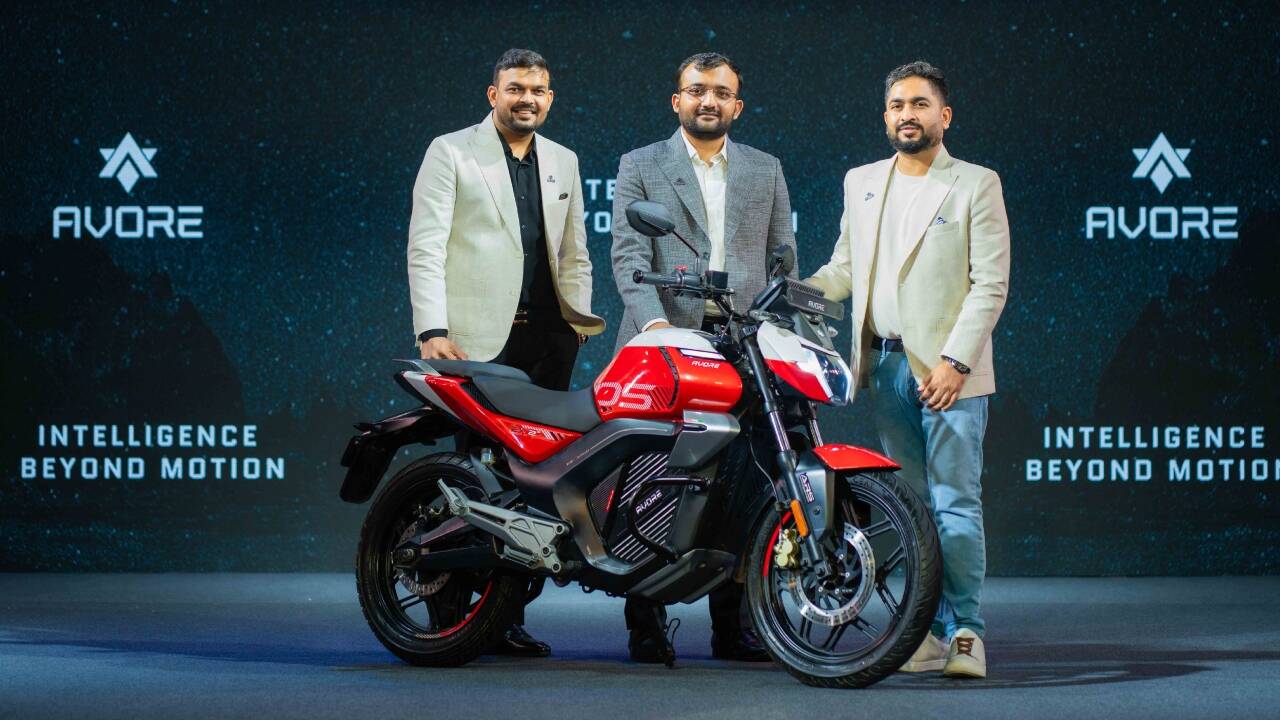
The launch event marked a critical juncture for Avore Electric, positioning the company as an aggressive challenger to legacy giants and early EV pioneers alike. With introductory pricing aggressively pinned at an accessible Rs 1.24 lakh for a strictly limited window, the firm is signaling its intent to capture mass-market volume without sacrificing high-end specifications. Industry observers note that the introductory price point undercuts several competing models in the high-speed electric motorcycle segment, creating an immediate ripple effect across dealership networks nationwide.
Beyond the raw specifications, the societal and economic implications of the EX series launch extend deep into India’s urban and semi-urban transportation corridors. As municipal authorities grapple with escalating vehicular emissions and fuel price volatility, high-capacity electric motorcycles offer a viable, cost-effective alternative for daily commuters and gig-economy delivery fleets. By lowering the entry barrier with a token booking amount of just Rs 799, Avore Electric is actively democratizing access to next-generation green mobility, setting the stage for a fiercely contested festive and fiscal sales season.
📌 Essential Story Takeaways
- Avore Electric launched the EX series motorcycles in India with an introductory starting price of Rs 1.24 lakh.
- The flagship models boast a top speed of 114 kmph and an extended single-charge range of up to 260 km.
- Bookings have officially opened across the country for a fully refundable or nominal token amount of Rs 799.
- The lineup features three distinct variants—EX1, EX2, and EX2S—tailored for varying battery capacities and rider needs.
Historical Background & Contextual Precedents
Over the past three years, the landscape shifted dramatically through a combination of government fiscal incentives—most notably the Faster Adoption and Manufacturing of (Hybrid &) Electric Vehicles (FAME) scheme—and significant venture capital inflows into domestic EV startups. Companies realized that to truly displace petrol motorcycles, electric alternatives had to match or exceed ICE vehicles in speed, build quality, and aesthetic appeal. Avore Electric’s multi-year research and development cycle was specifically engineered to bridge this gap, focusing heavily on thermal management systems and indigenous powertrain optimization to survive punishing Indian climatic conditions.
The timing of the EX series release is particularly strategic. As supply chain bottlenecks that plagued the industry during the global semiconductor shortage begin to ease, manufacturers are racing to secure market share before legacy players saturate the high-performance segment. Avore Electric’s emergence today is the direct result of calculated patience, allowing the firm to observe early market failures, learn from competitor recall incidents, and build a more robust, technologically advanced product suite right out of the gate.
Deep-Dive Investigation & Sectoral Impact
The EX lineup—comprising the EX1, EX2, and EX2S—employs a scalable platform approach. This manufacturing methodology allows the company to share chassis architecture and foundational electronics across all three models while varying the lithium-ion cell chemistry and pack density. The top-tier variant achieves its headline-grabbing 260 km range through advanced energy-density optimization and regenerative braking algorithms, though our technical analysts note that real-world range will inevitably vary based on aggressive throttle inputs, ambient temperatures, and payload weights.
Furthermore, supply chain audits suggest that Avore has secured long-term raw material supply pacts for cathode materials, insulating the firm against sudden lithium and nickel price shocks. However, challenges remain on the retail front. Setting up a robust, pan-India dealership and after-sales service network capable of handling high-voltage powertrain maintenance requires immense capital expenditure. Whether Avore Electric’s aggressive pricing leaves sufficient margins to fund this necessary retail expansion remains the central question for institutional investors monitoring the firm’s balance sheet.
Stakeholder Perspectives & Official Statements
Automotive sector analysts have largely praised the aggressive introductory pricing strategy. Rajesh Mehta, senior automotive research director at mobility insights firm Velocity, noted: ‘Pricing a high-speed motorcycle with a 260 km range at Rs 1.24 lakh is a bold market-spoiling move. It forces established players to rethink their margins and accelerates price parity between ICE and electric vehicles.’ Mehta added that consumer uptake will ultimately hinge on the real-world reliability of the vehicle’s connectivity suite and the seamlessness of the brand’s roadside assistance network.
Conversely, traditionalist dealer associations have voiced skepticism regarding the long-term viability of aggressive introductory pricing amid persistent inflation in battery component costs. Some legacy competitors have privately questioned whether the promotional Rs 1.24 lakh price tag is sustainable past the initial launch allotment. Nevertheless, consumer advocacy groups and urban mobility advocates have welcomed the development, pointing out that expanded access to high-performance electric transport is a vital step toward meeting national carbon reduction targets.
Strategic Implications & Future Roadmap
On the policy front, the broader macroeconomic environment for the EV sector hangs in the balance as regulatory bodies deliberate the successor frameworks to previous subsidy regimes. If Avore Electric can successfully insulate its pricing strategy from potential regulatory shifts while scaling its dealership footprint from Tier-1 metros into Tier-2 and Tier-3 cities, the EX series could become a benchmark for indigenous EV manufacturing. Critical dates to watch include the rollout of the second-phase dealership expansion in Q3 and the quarterly sales volume disclosures that will test whether consumer demand matches the initial hype.
❓ Key Questions Answered (FAQ)
The launch is driven by rising consumer demand for high-performance, long-range electric motorcycles that can match traditional petrol bikes, combined with Avore Electric's strategic push to capture market share amid easing supply chain constraints.
Legacy internal combustion engine (ICE) two-wheeler manufacturers face immediate competitive pressure, while urban commuters and delivery fleets gain access to a high-speed, cost-effective green mobility option with a lowered financial barrier to entry.
Key milestones include the official commencement of vehicle deliveries, the expiration of the introductory Rs 1.24 lakh pricing window, and the planned Q3 rollout of Avore's expanded tier-2 and tier-3 dealership network.





