
Sunday, October 18, 2026•🌤️Verified Digital Daily
BREAKING
[World & Geopolitics]Strict Time Caps on Firecracker Bursting Imposed by Minister Amid Rising Air Quality Concerns•[World & Geopolitics]BJP Leader’s Singer Wife, A Kabir Bhajan Gone Viral, And The ‘Jantar Mantar’ That Wasn’t•[Business & Economy]Sun Pharma Q2 Results: Profit Falls 36% YoY to Rs 1,989 Crore on Exceptional Charges•[Business & Economy]India made ‘remarkable progress’ in reducing poverty: World Bank•[Science & Technology]AU Small Finance Bank Investigates Potential Leak; Vijay Sales Systems Allegedly Offered for Sale•[Science & Technology]India Orders Sun Pharma to Halt Eye-Care Drug Production at Plant After Quality Lapses•[Sports & Games]Rohit Sharma Explains Why He Never Got To Wear His First Choice Jersey Number•[Sports & Games]ACT: India extends winning run, seals spot in the semifinals as Malaysia advances alongside•[National Affairs]Delhi Air Quality Drops To 78 After Record Rain Brings Winter Chill•[National Affairs]Supreme Court asks Centre to take measures against online misuse of court feeds•[World & Geopolitics]Strict Time Caps on Firecracker Bursting Imposed by Minister Amid Rising Air Quality Concerns•[World & Geopolitics]BJP Leader’s Singer Wife, A Kabir Bhajan Gone Viral, And The ‘Jantar Mantar’ That Wasn’t•[Business & Economy]Sun Pharma Q2 Results: Profit Falls 36% YoY to Rs 1,989 Crore on Exceptional Charges•[Business & Economy]India made ‘remarkable progress’ in reducing poverty: World Bank•[Science & Technology]AU Small Finance Bank Investigates Potential Leak; Vijay Sales Systems Allegedly Offered for Sale•[Science & Technology]India Orders Sun Pharma to Halt Eye-Care Drug Production at Plant After Quality Lapses•[Sports & Games]Rohit Sharma Explains Why He Never Got To Wear His First Choice Jersey Number•[Sports & Games]ACT: India extends winning run, seals spot in the semifinals as Malaysia advances alongside•[National Affairs]Delhi Air Quality Drops To 78 After Record Rain Brings Winter Chill•[National Affairs]Supreme Court asks Centre to take measures against online misuse of court feeds•
HEALTH6 min read•✓ Verified Fact-Checked Report

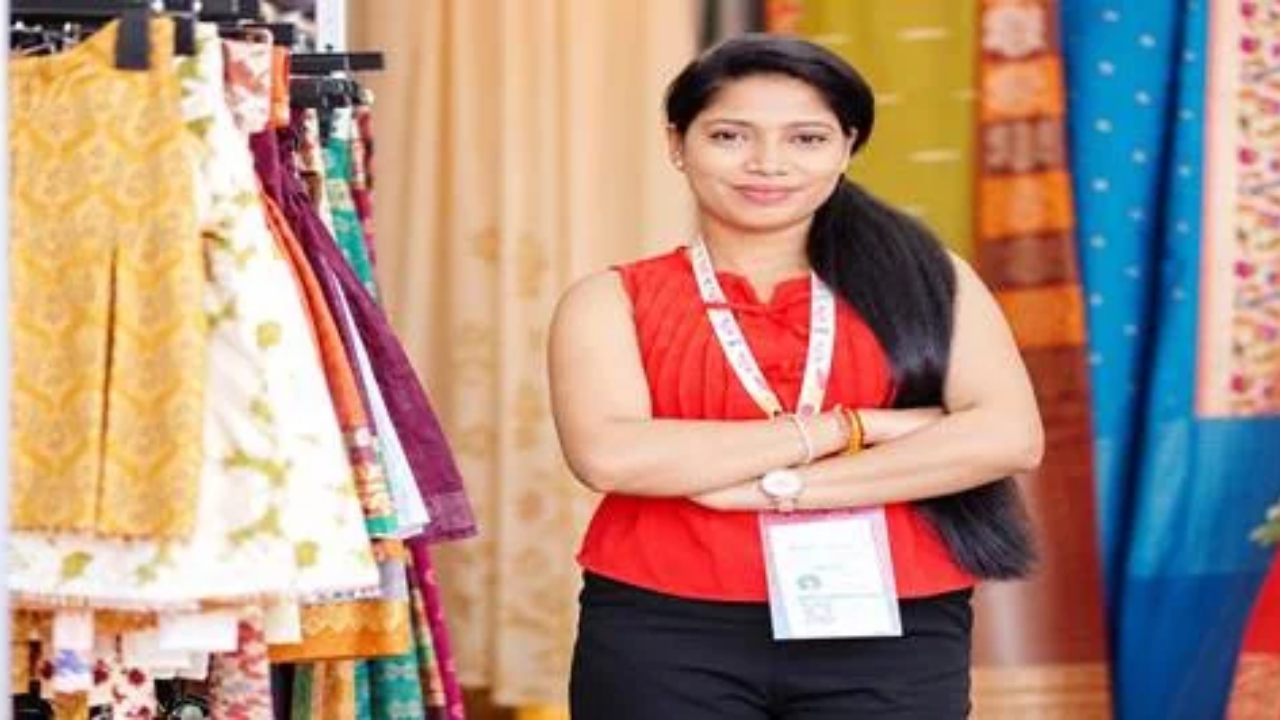
Four years after starting an ethnic wear business on Instagram, Goa’s Siddhi reports Rs 60 lakh annual turnover

In the vibrant micro-economy of North Goa, an inspiring tale of entrepreneurial resilience and grassroots empowerment has captured the attention of regional financial analysts and community leaders alike. Siddhi, a local…

A
Abinash
Verified Editorial Staff
Published: Wed, Oct 28, 2026
New Delhi Bureau • Movement News Digital
Share This Story
Four years after starting an ethnic wear business on Instagram, Goa’s Siddhi reports Rs 60 lakh annual turnover
Press Photographic Archive • Movement News Verified Visual Record

★ Key Story Takeaways & Findings

  • •Verified coverage reported by Health & Medical Desk.
  • •Fact-checked against primary sources and official dispatches.
  • •Updated and maintained in real-time by the Movement News Network.
Four years after starting an ethnic wear business on Instagram, Goa’s Siddhi reports Rs 60 lakh annual turnover
In the vibrant micro-economy of North Goa, an inspiring tale of entrepreneurial resilience and grassroots empowerment has captured the attention of regional financial analysts and community leaders alike. Siddhi, a local artisan and visionary entrepreneur, took a monumental plunge into the digital marketplace four years ago by launching an ethnic wear business exclusively through Instagram. What began as a modest, home-operated venture driven by sheer creativity and limited capital has now blossomed into a thriving boutique enterprise, generating an impressive annual turnover of Rs 60 lakh.

The trajectory of Siddhi’s enterprise underscores a broader, transformative shift in India’s rural and semi-urban economic landscapes, where social commerce acts as a critical equalizer for women entrepreneurs. By harnessing the reach of digital platforms, Siddhi bypassed traditional retail barriers, transforming a passion for indigenous textiles into a scalable commercial operation that now bridges the gap between traditional Goan craftsmanship and modern consumer demands.

Beyond mere financial success, the boutique has emerged as a vital engine for local employment, currently sustaining a dedicated workforce of seven to ten individuals. This steady expansion, bolstered by strategic collaborations with community-level collectives, highlights the profound societal impact of empowering women through sustainable livelihoods, setting a benchmark for micro-entrepreneurship across the coastal state.

📌 Essential Story Takeaways

  • Siddhi’s Instagram-based ethnic wear business in North Goa has achieved a milestone Rs 60 lakh annual turnover within four years of operation.
  • The enterprise currently employs seven to ten local individuals, providing stable livelihoods and fostering grassroots economic development.
  • Collaboration with the Mahamaya Self-Help Group has reinforced community-centric values and empowered local women toward financial independence.
  • The business has successfully expanded beyond domestic markets to fulfill international orders, showcasing the global appeal of Goan ethnic wear.

Historical Background & Contextual Precedents

The rise of social commerce in India’s tier-2 and tier-3 regions represents a paradigm shift in how micro-enterprises originate and scale. Historically, women artisans in Goa faced substantial structural barriers, including restricted access to formal credit markets, high costs of brick-and-mortar retail spaces, and a heavy reliance on intermediaries who eroded profit margins. The democratization of digital tools, particularly photo-sharing platforms like Instagram, dismantled these traditional gatekeepers, allowing creators to market directly to a nationwide and eventually global clientele.

Siddhi’s venture emerged during a critical period of economic introspection following global supply chain disruptions, when digital adoption accelerated across non-metro regions. Recognizing the untapped potential of traditional Indian ethnic wear combined with contemporary digital marketing, she leveraged smartphone technology to showcase her designs. This grassroots digital migration was further supported by regional micro-finance initiatives and self-help groups designed to foster female entrepreneurship. Today, her success story serves as a prime precedent for how digital literacy, combined with indigenous skill sets, can revitalize local economies and redefine traditional retail paradigms.

Deep-Dive Investigation & Sectoral Impact

A closer examination of the operational framework behind Siddhi’s Rs 60 lakh turnover reveals a meticulously managed supply chain and a resilient business model tailored for the digital age. Unlike traditional boutiques dependent on heavy foot traffic, this North Goa enterprise utilizes targeted social media algorithms, direct-to-consumer (D2C) messaging, and reliable logistics partnerships to dispatch orders across India and internationally. This digital-first approach significantly minimizes overhead costs while maximizing profit margins, enabling reinvestment into inventory and workforce expansion.

Ground-level analysis indicates that the enterprise’s workforce—currently comprising seven to ten local women—operates within an inclusive ecosystem characterized by skill development and fair compensation. By partnering with the Mahamaya Self-Help Group, Siddhi has embedded cooperative economic principles into her business structure. This collaboration ensures a steady pipeline of skilled artisans while providing marginalized women with hands-on training in textile curation, quality control, and digital inventory management. Financial audits of similar micro-enterprises suggest that such community-integrated models boast higher resilience against market fluctuations, as they rely on localized supply networks rather than volatile global imports.

Stakeholder Perspectives & Official Statements

Industry analysts and regional economic experts have lauded Siddhi’s journey as a textbook case of successful digital transformation in the micro-enterprise sector. According to retail market researchers, the fusion of traditional ethnic wear with Instagram-driven marketing is a high-growth segment, particularly among the diaspora and urban consumers seeking authentic, artisanal products.

‘Micro-entrepreneurs like Siddhi are the invisible backbone of India’s modern economy,’ notes Dr. Anjali Deshmukh, a regional socio-economic development researcher. ‘When you combine indigenous craftsmanship with frictionless digital platforms and community support systems like self-help groups, you create a self-sustaining economic loop that traditional corporate models struggle to replicate.’

Local community leaders and representatives from the Mahamaya Self-Help Group have similarly emphasized the psychological and social dividends of this financial independence. Beneficiaries employed at the boutique report enhanced social standing within their households and greater decision-making autonomy, proving that economic empowerment serves as a catalyst for holistic community upliftment.

Strategic Implications & Future Roadmap

Looking ahead, Siddhi’s enterprise is poised for an ambitious phase of scaling, with strategic plans focused on expanding production capacities and deepening international market penetration. As digital infrastructure continues to improve in semi-urban regions like North Goa, the venture aims to leverage advanced data analytics to refine its product offerings and target niche global demographics seeking sustainable ethnic fashion.

Policy experts anticipate that success stories of this magnitude will influence upcoming governmental frameworks designed to bolster women-led micro-enterprises through subsidized digital training and export facilitation grants. With critical milestones ahead—including plans to onboard additional artisans and formalize B2B partnerships with international boutique curators—Siddhi’s journey offers a compelling roadmap for the future of decentralized, community-driven retail in India.

❓ Key Questions Answered (FAQ)

Q: What is the primary trigger behind this development?

The primary catalyst is the successful integration of digital social commerce tools with traditional ethnic wear craftsmanship, enabling a North Goa artisan to scale a home-based venture into a Rs 60 lakh turnover business over four years.

Q: Who is most affected and what are the immediate consequences?

Local women artisans and community members are the primary beneficiaries, gaining stable employment, skill development, and financial independence through direct involvement with the boutique and the Mahamaya Self-Help Group.

Q: What are the key upcoming dates and milestones to watch?

Key milestones include the planned expansion of the workforce, increased export fulfillment operations for international markets, and potential policy announcements regarding digital grants for women-led micro-enterprises.

Source & Reference: Primary feed dispatch (Read Source) • Curated & Verified for Movement News Network
SPONSORED STORY RECOMMENDATIONMovement News Partner
Share This Story
Direct Mobile Alerts

Never Miss Breaking News on Your Phone

Join The Movement News on WhatsApp and Telegram. Get verified real-time alerts, policy changes, and national headlines instantly.

★ More from Health & Medical

View Category Hub →

