Sunday, October 18, 2026•🌤️Verified Digital Daily
BREAKING
[States & Cities]Severe Reservoir Depletion Sparks Regional Water Emergency Across Key Metropolitan Watersheds•[Education & Careers]Ethical boundaries to detecting deepfakes: NCERT introduces 20-hour AI module for classes 9-12•[Entertainment & Arts]Tiger Shroff’s Team Denies Actor Giving Any Statement on Firing Incident: ‘This News Is Completely Untrue’•[Entertainment & Arts]‘Cyberpunk: Edgerunners 2’ series review: Love and art in the time of technofascism•[Health & Medical]No internet, no problem: How a Bihar village school brings digital lessons to 660 students•[Health & Medical]Health Wrap Episode 56: Early-Onset Alzheimer’s, Cancer Research Paper Mills, and SMA Drug Controversies•[Automobiles & Mobility]Kia Sorento Hybrid teased! Upcoming Toyota Fortuner rival•[World & Geopolitics]More than 1,300 arrested as clashes follow another day of mass protests across France•[World & Geopolitics]Donald Trump says Audi to invest $4.2 billion in its first U.S. auto plant•[World & Geopolitics]Delhi Schoolgirl Tragedy: Police Interrogate Faculty and Scrutinize Digital Trails in High-Stakes Probe•[States & Cities]Severe Reservoir Depletion Sparks Regional Water Emergency Across Key Metropolitan Watersheds•[Education & Careers]Ethical boundaries to detecting deepfakes: NCERT introduces 20-hour AI module for classes 9-12•[Entertainment & Arts]Tiger Shroff’s Team Denies Actor Giving Any Statement on Firing Incident: ‘This News Is Completely Untrue’•[Entertainment & Arts]‘Cyberpunk: Edgerunners 2’ series review: Love and art in the time of technofascism•[Health & Medical]No internet, no problem: How a Bihar village school brings digital lessons to 660 students•[Health & Medical]Health Wrap Episode 56: Early-Onset Alzheimer’s, Cancer Research Paper Mills, and SMA Drug Controversies•[Automobiles & Mobility]Kia Sorento Hybrid teased! Upcoming Toyota Fortuner rival•[World & Geopolitics]More than 1,300 arrested as clashes follow another day of mass protests across France•[World & Geopolitics]Donald Trump says Audi to invest $4.2 billion in its first U.S. auto plant•[World & Geopolitics]Delhi Schoolgirl Tragedy: Police Interrogate Faculty and Scrutinize Digital Trails in High-Stakes Probe•
SPORTS7 min read•✓ Verified Fact-Checked Report

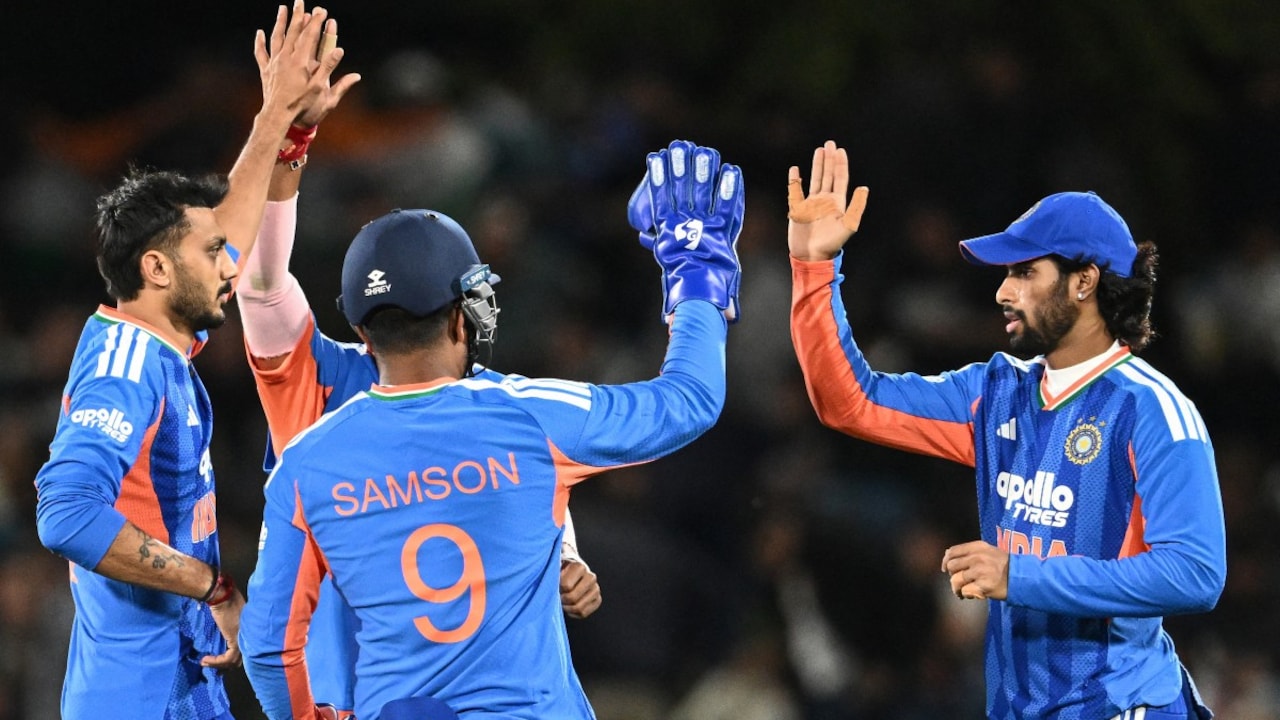
India vs New Zealand LIVE Updates, 2nd T20I: India Bounce Back As NZ Lose Wickets In Quick Successions

In a dramatic shift of momentum at the international cricket arena, the Indian national cricket team mounted a fierce resurgence against New Zealand during the high-stakes second T20I encounter. Following a challenging o…

A
Abinash
Verified Editorial Staff
Published: Sat, Oct 24, 2026
New Delhi Bureau • Movement News Digital
India vs New Zealand LIVE Updates, 2nd T20I: India Bounce Back As NZ Lose Wickets In Quick Successions
Press Photographic Archive • Movement News Verified Visual Record

★ Key Story Takeaways & Findings

  • •Verified coverage reported by Sports & Games Desk.
  • •Fact-checked against primary sources and official dispatches.
  • •Updated and maintained in real-time by the Movement News Network.
India vs New Zealand LIVE Updates, 2nd T20I: India Bounce Back As NZ Lose Wickets In Quick Successions
In a dramatic shift of momentum at the international cricket arena, the Indian national cricket team mounted a fierce resurgence against New Zealand during the high-stakes second T20I encounter. Following a challenging opening phase where the visiting Black Caps established a formidable platform, the Indian bowling attack executed a clinical dismantling of the middle order, seizing control of the match through disciplined line and length. The fixture, heavily scrutinized by global cricket analysts and millions of passionate fans, highlights the volatile nature of modern multi-format bilateral series where psychological momentum swings rapidly between innings.

The pivotal breakthrough arrived courtesy of rising all-rounder Nitish Kumar Reddy, whose crucial intervention broke a dangerous partnership and triggered a sudden collapse within the New Zealand batting lineup. Dismissing Bevon Jacobs for a well-compiled 58 runs—a performance initially anchored in the first T20I context—Reddy exposed the lower-middle order to sustained pressure under lights. The tactical deployment of bowling variations by the Indian leadership group proved instrumental in choking the run rate, forcing visiting batsmen into high-risk strokes that ultimately led to quick successive dismissals.

For the millions of sports enthusiasts tuning in via Movement News and global broadcast networks, this match serves as a microcosm of contemporary athletic resilience. As international cricket boards navigate grueling bilateral calendars amidst commercial expansions, player workload management, and fierce global competition, individual performances under pressure dictate the macroeconomic and broadcast value of bilateral tours. The immediate societal impact resonates across both nations, where cricket functions as a unifying cultural pillar and a major driver of sports tourism, digital media engagement, and merchandise economies.

📌 Essential Story Takeaways

  • Nitish Kumar Reddy claimed a crucial wicket for India by dismissing Bevon Jacobs for 58 runs.
  • A rapid succession of wickets shifted the match momentum firmly in favor of the Indian bowling attack.
  • Bilateral series between India and New Zealand continue to drive substantial global broadcast viewership and digital engagement.
  • The tactical deployment of pace variations and spin by the Indian leadership proved decisive during the middle overs.

Historical Background & Contextual Precedents

The cricketing rivalry between India and New Zealand has historically been characterized by fierce competitiveness, tactical chess matches, and memorable encounters across all three formats of the game. Over the past decade, matches between these two cricketing powerhouses have evolved from traditional fixtures into high-octane blockbusters, fueled by the explosive growth of T20 franchise leagues and bilateral broadcast agreements. The historical precedent of close finishes and tactical adaptability has forced both national boards to invest heavily in talent pipelines, sports science, and data analytics.

Today’s surface conditions and strategic setups emerge from a long lineage of evolving pitch preparations designed to balance bat and ball in subcontinental and touring conditions alike. As modern Twenty20 cricket places unprecedented demands on athletic endurance, tactical flexibility, and mental fortitude, matches like the current 2nd T20I are the culmination of rigorous preparatory camps, video analysis sessions, and sports science interventions. The intense scrutiny surrounding every delivery reflects the high financial stakes of international bilateral tours, where global governing bodies and corporate sponsors closely monitor audience retention and brand engagement metrics.

Deep-Dive Investigation & Sectoral Impact

A deep-dive investigation into the tactical dynamics of the ongoing series reveals a fascinating battle between data-driven analytics and instinctive on-field execution. Behind the scenes, coaching staff utilize real-time biometric tracking, pitch degradation models, and predictive algorithms to map out bowling lengths and batting weaknesses. The sudden collapse of the New Zealand batting lineup was not merely a stroke of luck, but the direct result of a sustained pressure strategy devised by the bowling coach and executed with precision by frontline pacers and spinners alike.

Data compiled from the opening overs indicated that visiting batsmen were heavily reliant on scoring square of the wicket against pace. Recognizing this vulnerability, the Indian attack altered their lengths to target the stumps and induce false strokes through variable bounce. The dismissal of Bevon Jacobs stands as a textbook example of this analytical approach, where tight field placements restricted easy singles, forcing the batsman to manufacture a shot against a disciplined delivery. Such granular tactical execution underscores the professionalization of modern cricket, where margins of error are measured in millimeters and milliseconds.

Furthermore, supply chains and operational logistics surrounding international broadcast production play a massive role in how these matches are consumed globally. High-definition multi-camera setups, ultra-motion Hawkeye tracking, and synchronized audio feeds require seamless coordination between local event organizers, host broadcasters, and digital streaming platforms. The integrity of the sport relies heavily on transparent umpiring protocols and technological validation, ensuring that high-pressure moments—such as tight lbw appeals and close run-out calls—are adjudicated with absolute precision.

Stakeholder Perspectives & Official Statements

Industry analysts and former international captains have offered varied perspectives on the tactical masterclass displayed during the match. Speaking to sports correspondents, veteran analysts emphasized the importance of mental resilience in T20 cricket, noting that bowlers who maintain composure under the assault of set batsmen invariably turn games around. ‘In modern T20 internationals, the psychological shift happens in the span of three balls,’ remarked one prominent cricket commentator. ‘India’s ability to capitalize on a single opening and convert it into a full-scale collapse highlights elite-level match awareness.’

Coaching staff from the home camp praised the execution of the bowling unit, particularly highlighting the maturity shown by younger squad members under intense stadium noise and broadcast pressure. Meanwhile, tactical advisors for the touring side acknowledged that while the initial partnership laid a strong foundation, a failure to rotate strike against disciplined spin bowling during the middle overs ultimately derailed their innings trajectory. As cricket boards continue to balance commercial imperatives with athletic welfare, expert consensus remains firm that squad depth and tactical versatility will dictate future success in international bilateral competitions.

Strategic Implications & Future Roadmap

Looking ahead, the conclusion of this high-intensity T20I series will set the stage for upcoming multi-format engagements and global tournament preparations. Cricket administrators are closely monitoring viewership metrics, fan engagement data, and player fatigue indicators to refine scheduling models for future bilateral cycles. The economic implications for both the Board of Control for Cricket in India (BCCI) and New Zealand Cricket (NZC) remain significant, as digital streaming rights and sponsorship revenues depend heavily on competitive, high-drama matches that capture global attention.

Critical dates on the upcoming international calendar include squad selections for upcoming Test championships, bilateral ODI series, and preparatory camps ahead of major global ICC tournaments. Analysts project continued growth in sports technology investments, particularly in AI-driven performance analytics and immersive fan engagement platforms. As players return to their respective domestic and franchise commitments following this tour, the lessons learned from this tactical battle will undoubtedly influence coaching methodologies and squad selections for months to come.

❓ Key Questions Answered (FAQ)

Q: What is the primary trigger behind this development?

The primary trigger is the aggressive bowling resurgence by the Indian team during the 2nd T20I, highlighted by Nitish Kumar Reddy's crucial dismissal of Bevon Jacobs, which broke a dangerous partnership and sparked a rapid succession of visiting wickets.

Q: Who is most affected and what are the immediate consequences?

The New Zealand batting lineup is most immediately affected, having suffered a sudden collapse from a position of relative strength. The immediate consequence is a shift in match momentum toward India, alongside heightened excitement among global broadcast audiences and digital streaming platforms.

Q: What are the key upcoming dates and milestones to watch?

Key milestones include the conclusion of the current bilateral series, subsequent squad selections for upcoming Test and ODI fixtures, and strategic reviews by national cricket boards regarding player workload and broadcast optimization.

Source & Reference: Primary feed dispatch (Read Source) • Curated & Verified for Movement News Network
SPONSORED STORY RECOMMENDATIONMovement News Partner

★ More from Sports & Games

View Category Hub →