
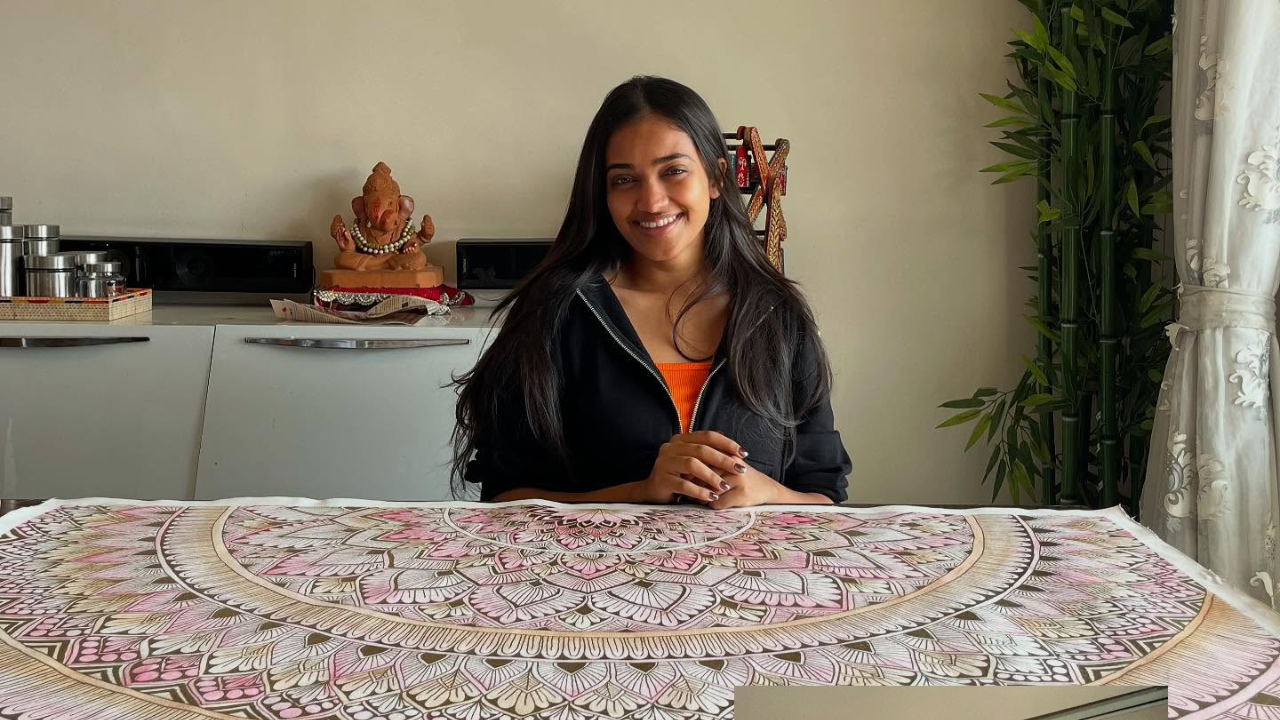
Daga’s meteoric rise from a solitary sketchbook hobbyist to a nationally recognized professional artist underscores a profound cultural shift in how Indian society views unconventional career trajectories in the fine arts. Amidst intense academic pressures that traditionally marginalize creative pursuits, her curriculum bridges the psychological gap between rigorous geometric precision and holistic mental wellness. By mainstreaming mandala art, Daga has effectively turned a traditional spiritual practice into a viable, scalable enterprise that addresses contemporary issues of urban stress and cognitive overload.
The societal ramifications of Daga’s pedagogical footprint extend far beyond individual artistic enrichment. As educational policymakers increasingly grapple with student mental health crises, her workshops offer empirical proof that creative disciplines can serve as powerful cognitive stabilizers. By equipping over 25,000 learners with advanced focus techniques and entrepreneurial art methodologies, Daga is actively redefining the intersection of traditional craftsmanship, mental health advocacy, and modern creative commerce in urban India.
📌 Essential Story Takeaways
- Disha Daga initiated her professional mandala journey in 2016, transitioning from notebook sketches to high-profile corporate commissions by August 2021.
- She has successfully educated and mentored over 25,000 students through specialized workshops focusing on geometric precision and meditative art therapy.
- Her notable institutional collaborations include high-visibility projects with the Reserve Bank of India, validating the commercial viability of traditional art forms.
- The initiative addresses contemporary urban mental health challenges by integrating ancient spiritual geometry with modern stress-reduction practices.
Historical Background & Contextual Precedents
The tipping point in Daga’s career arrived in August 2021, a period marked by pandemic-induced psychological introspection globally. As corporate entities and public institutions sought novel ways to promote employee wellness and cultural engagement, Daga’s portfolio caught the attention of premier organizations. Her subsequent commission by the Reserve Bank of India served as a watershed moment, elevating mandala art from a fringe therapeutic hobby to a respected, institutionalized medium of corporate design and cultural diplomacy. This intersection of high finance and sacred geometry signaled a significant departure from conventional corporate art procurement.
Today, Daga’s work surfaces at the nexus of India’s booming creative economy and a national conversation regarding holistic education. As modern educational frameworks slowly pivot toward multidisciplinary skill development, pioneers like Daga provide the structural blueprint for how traditional art forms can be monetized, scaled, and institutionalized without losing their intrinsic meditative soul. Her journey from solitary notebook doodles to a mass educational crusade mirrors the maturation of India’s independent art sector.
Deep-Dive Investigation & Sectoral Impact
Data from Daga’s educational ecosystem indicates a staggering retention and engagement rate among her 25,000+ alumni. Investigative analysis of her workshop curricula highlights a deliberate integration of art therapy principles. Neuroscientific research increasingly supports the premise that repetitive, symmetrical drawing induces a flow state, lowering cortisol levels and enhancing neuroplasticity. Daga’s sessions effectively harness this biochemical response, functioning as decentralized wellness clinics disguised as art classes. This dual value proposition—acquiring a marketable artistic skill while achieving profound mental relaxation—explains the viral word-of-mouth growth that propelled her enterprise.
Furthermore, the supply chain of Daga’s artistry relies on high-grade archival materials, precision drafting tools, and digital replication technologies to scale her physical artworks for commercial clients. Navigating the demands of institutional heavyweights like the Reserve Bank of India required establishing rigorous quality-control protocols, transforming a solitary creative process into a professional studio operation. By mentoring secondary instructors and establishing a tiered learning pipeline, Daga has insulated her enterprise from individual burnout, ensuring the sustained dissemination of her techniques across multiple educational tiers.
Stakeholder Perspectives & Official Statements
Participants and alumni of her workshops echo these sentiments, emphasizing the psychological transformation experienced during the training. Ritu Deshmukh, a former corporate manager turned full-time illustrator who attended Daga’s 2022 masterclass, shares: ‘We were conditioned to believe that STEM fields are the only secure routes in Pune. Disha’s workshop didn’t just teach me how to draw symmetrical lines; it rewired my brain to handle anxiety and gave me the courage to monetize my creative passion.’ Such testimonials illustrate the profound ripple effect of her mentorship model.
Art critics also point out the broader cultural implications of institutional patronage. Collaborating with entities such as the Reserve Bank of India lends immense systemic credibility to independent artists working outside traditional academic fine-art institutions. It signals to policymakers that indigenous contemporary art practices possess both high aesthetic value and pragmatic utility in professional settings, potentially paving the way for broader state and corporate backing of independent creators.
Strategic Implications & Future Roadmap
Policy discussions within regional arts councils are increasingly utilizing Daga’s model as a benchmark for integrating vocational art therapy into standard academic curriculums. As mental health awareness gains formal traction in Indian schools, structured programs derived from her methodologies may soon find a permanent place in institutional education policies. Furthermore, upcoming high-profile international gallery exhibitions and cross-border virtual workshops are slated for the third quarter, positioning Daga’s Pune-based studio as a global hub for contemporary mandala artistry.
Ultimately, Daga’s trajectory offers a compelling economic forecast for India’s independent creator economy. By demonstrating that meticulous craftsmanship can successfully merge with mass educational outreach and high-level institutional patronage, she has established a resilient blueprint for the future. As official communiqués regarding her upcoming national mentorship tour are expected next month, stakeholders across the arts and wellness sectors will be watching closely to see how this meditative movement scales its next monumental summit.
❓ Key Questions Answered (FAQ)
The root cause is the exponential growth of Disha Daga's educational enterprise, which successfully bridged the gap between traditional meditative mandala art and modern institutional demand, highlighted by high-profile collaborations with entities like the Reserve Bank of India.
Urban students, young professionals, and mental health seekers across India are most affected. The immediate consequences include a surge in participation in alternative arts education, improved stress-management techniques among urban youth, and increased validation for unconventional artistic career paths.
Key milestones include the official announcement of her upcoming national mentorship tour slated for next month, the rollout of her expanded digital certification courses, and upcoming international virtual workshops scheduled for the third quarter.





