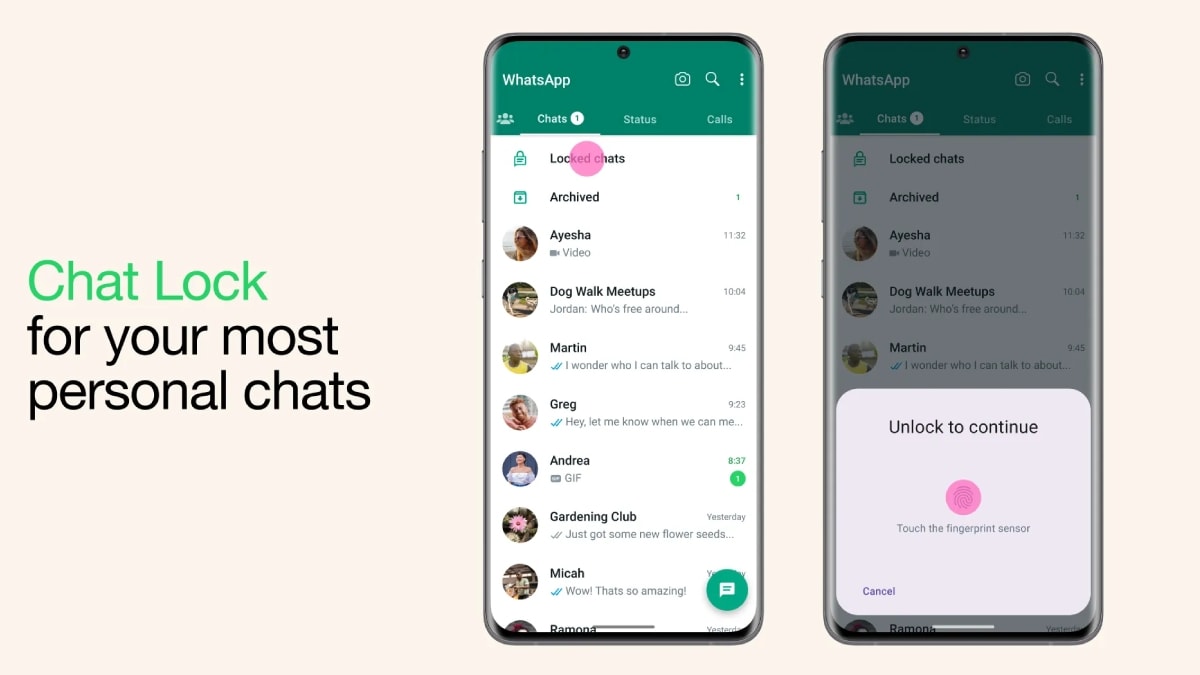
The Chat Lock feature fundamentally alters how end-to-end encrypted conversations are quarantined within the application interface. Rather than relying on a singular application-level passcode or biometric lock that governs the entire app, WhatsApp’s protocol allows for granular isolation. Selected individual and group threads are excised from the primary inbox and sequestered within a dedicated, authenticated folder, shifting the paradigm from all-or-nothing security to selective compartmentalization.
From a sociotechnical perspective, the implementation of Chat Lock reflects a broader industry pivot toward localized, user-controlled privacy enhancements. As digital communications increasingly substitute for face-to-face interactions, the boundary between public and private domestic spaces has eroded. This investigative report explores the technical architecture, operational mechanics, and societal implications of WhatsApp’s Chat Lock feature, offering a comprehensive guide on how users navigate these sophisticated privacy protocols.
📌 Essential Story Takeaways
- WhatsApp Chat Lock isolates individual and group conversations into a separate, authenticated folder without locking the entire application.
- Access to locked folders requires strict biometric authentication, such as fingerprint or facial recognition, or the device's numerical passcode.
- A secondary privacy layer, the 'secret code' feature, allows users to completely hide the locked chats folder from the main inbox interface.
- While message content and sender previews are successfully masked in push notifications, voice and video calls from locked contacts bypass the folder restriction.
Historical Background & Contextual Precedents
Meta’s engineering teams recognized that while end-to-end encryption (E2EE) successfully protects data in transit from interception by internet service providers, telecommunication companies, and governments, it offers zero protection against ‘evil maid’ attacks or physical coercion at the device level. Users frequently hand over unlocked devices to show photographs, make payments, or allow children to play games, inadvertently exposing active messaging threads. This structural tension between usability and confidentiality catalyzed the development of Chat Lock, which builds upon WhatsApp’s existing multi-layered security framework, including two-step verification and disappearing messages, to provide a localized security perimeter.
Deep-Dive Investigation & Sectoral Impact
Crucially, this container is bound directly to the device’s biometric authentication secure enclave—such as Apple’s Secure Enclave or Android’s Trusted Execution Environment (TEE). This architectural choice ensures that Meta’s servers do not store the cryptographic keys required to unlock the folder; the decryption process occurs entirely on the local device, preserving the integrity of WhatsApp’s zero-knowledge end-to-end encryption model. Furthermore, the introduction of the ‘secret code’ feature utilizes a user-defined alphanumeric string that generates a secondary hashing sequence, effectively rendering the locked folder invisible to any user scrolling through the standard chat list unless the exact string is inputted into the search bar.
Despite these robust security measures, investigators have identified specific operational limitations. While text previews and sender names are strictly redacted in system push notifications—displaying only generic alerts such as ‘WhatsApp: 1 new message’—incoming WhatsApp voice and video calls from locked contacts still trigger standard incoming call screens. This operational loophole occurs because real-time signaling protocols for VoIP calls require immediate hardware interrupt handling, presenting a distinct friction point between absolute privacy and telephonic accessibility that privacy advocates continue to monitor.
Stakeholder Perspectives & Official Statements
Conversely, cybersecurity educators have raised concerns regarding user complacency and the potential weaponization of hidden folders in abusive relationships. Security specialists emphasize that while Chat Lock conceals visible threads, it does not provide forensic immunity; sophisticated digital forensics tools with physical or logical device access can still recover cached database artifacts if the underlying operating system is compromised. Furthermore, domestic violence researchers have pointed out that secret codes and hidden folders can introduce new dynamics of digital secrecy and surveillance within interpersonal conflicts, underscoring the reality that technical privacy features cannot fully neutralize complex sociological vulnerabilities.
Strategic Implications & Future Roadmap
Critical milestones to watch include the rollout of cross-platform interoperability mandates, which may require WhatsApp to integrate its security wrappers with third-party messaging services without degrading localized encryption standards. As digital privacy concerns mount globally, features like Chat Lock will transition from novel conveniences to baseline industry expectations, permanently altering the technological landscape of interpersonal digital communication.
❓ Key Questions Answered (FAQ)
The feature was developed in response to growing consumer demand for granular privacy controls on shared devices, mitigating the risk of unauthorized physical access to sensitive personal and professional conversations without locking the entire application.
Smartphone users who frequently share devices with family members, colleagues, or children are directly impacted. The immediate consequence is enhanced privacy and peace of mind, allowing users to isolate sensitive chats behind biometric authentication and secret codes.
Key milestones include forthcoming platform updates expected over the next fiscal quarters, which will test the integration of Chat Lock frameworks with emerging cross-platform messaging interoperability standards and enhanced cloud backup encryption protocols.