Sunday, October 18, 2026•🌤️Verified Digital Daily
BREAKING
[States & Cities]Severe Reservoir Depletion Sparks Regional Water Emergency Across Key Metropolitan Watersheds•[Education & Careers]Ethical boundaries to detecting deepfakes: NCERT introduces 20-hour AI module for classes 9-12•[Entertainment & Arts]Tiger Shroff’s Team Denies Actor Giving Any Statement on Firing Incident: ‘This News Is Completely Untrue’•[Entertainment & Arts]‘Cyberpunk: Edgerunners 2’ series review: Love and art in the time of technofascism•[Health & Medical]No internet, no problem: How a Bihar village school brings digital lessons to 660 students•[Health & Medical]Health Wrap Episode 56: Early-Onset Alzheimer’s, Cancer Research Paper Mills, and SMA Drug Controversies•[Automobiles & Mobility]Kia Sorento Hybrid teased! Upcoming Toyota Fortuner rival•[World & Geopolitics]More than 1,300 arrested as clashes follow another day of mass protests across France•[World & Geopolitics]Donald Trump says Audi to invest $4.2 billion in its first U.S. auto plant•[World & Geopolitics]Delhi Schoolgirl Tragedy: Police Interrogate Faculty and Scrutinize Digital Trails in High-Stakes Probe•[States & Cities]Severe Reservoir Depletion Sparks Regional Water Emergency Across Key Metropolitan Watersheds•[Education & Careers]Ethical boundaries to detecting deepfakes: NCERT introduces 20-hour AI module for classes 9-12•[Entertainment & Arts]Tiger Shroff’s Team Denies Actor Giving Any Statement on Firing Incident: ‘This News Is Completely Untrue’•[Entertainment & Arts]‘Cyberpunk: Edgerunners 2’ series review: Love and art in the time of technofascism•[Health & Medical]No internet, no problem: How a Bihar village school brings digital lessons to 660 students•[Health & Medical]Health Wrap Episode 56: Early-Onset Alzheimer’s, Cancer Research Paper Mills, and SMA Drug Controversies•[Automobiles & Mobility]Kia Sorento Hybrid teased! Upcoming Toyota Fortuner rival•[World & Geopolitics]More than 1,300 arrested as clashes follow another day of mass protests across France•[World & Geopolitics]Donald Trump says Audi to invest $4.2 billion in its first U.S. auto plant•[World & Geopolitics]Delhi Schoolgirl Tragedy: Police Interrogate Faculty and Scrutinize Digital Trails in High-Stakes Probe•
HEALTH6 min read•✓ Verified Fact-Checked Report

NMC withdraws 2023 rules on medical education standards, raising accountability concerns

In a regulatory pivot that has sent shockwaves through the healthcare and academic sectors, the National Medical Commission (NMC) has officially withdrawn its landmark 2023 regulations governing medical education standar…

A
Abinash
Verified Editorial Staff
Published: Sat, Oct 24, 2026
New Delhi Bureau • Movement News Digital
NMC withdraws 2023 rules on medical education standards, raising accountability concerns
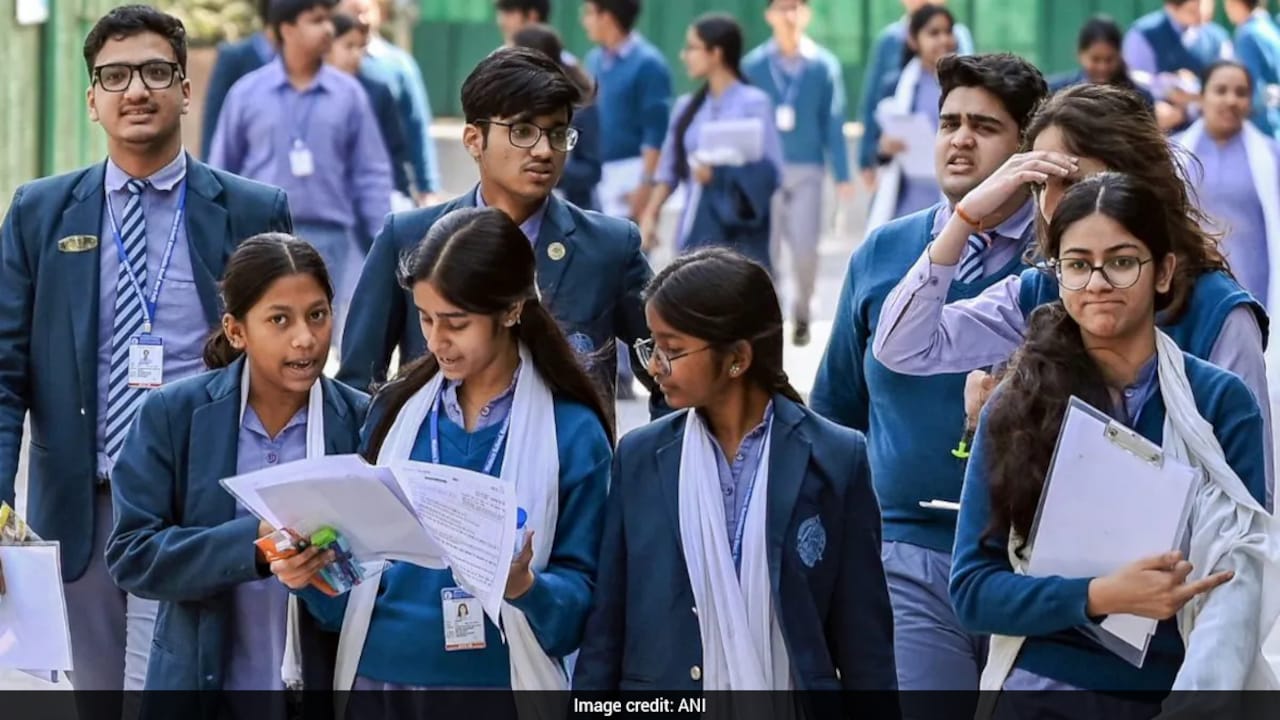
Press Photographic Archive • Movement News Verified Visual Record

★ Key Story Takeaways & Findings

  • •Verified coverage reported by Health & Medical Desk.
  • •Fact-checked against primary sources and official dispatches.
  • •Updated and maintained in real-time by the Movement News Network.
NMC withdraws 2023 rules on medical education standards, raising accountability concerns
In a regulatory pivot that has sent shockwaves through the healthcare and academic sectors, the National Medical Commission (NMC) has officially withdrawn its landmark 2023 regulations governing medical education standards. The sudden repeal of the Minimum Standards Requirements for Medical Colleges and Postgraduate Courses (MSMER-2023) has dismantled a framework that was originally designed to rigorously monitor infrastructure, faculty retention, and clinical patient loads across the nation’s rapidly expanding medical institutions.

The apex medical regulator justified the sweeping rollback by citing the urgent need to remove overlapping bureaucratic procedures, eliminate regulatory duplication, and streamline the administrative processes required for setting up and maintaining medical colleges. According to official communications, the Commission aims to unburden educational institutions from redundant compliance mechanisms, fostering a more conducive environment for institutional growth amidst a severe national shortage of qualified healthcare professionals.

However, this justification has run headfirst into fierce opposition from prominent medical activists, public health advocates, and student bodies. Critics argue that dismantling these stringent benchmarks effectively dilutes essential regulatory oversight at a critical juncture for Indian medicine, warning that compromised educational standards will inevitably produce underprepared practitioners, ultimately placing vulnerable patients at severe risk across both urban and rural healthcare delivery networks.

📌 Essential Story Takeaways

  • The National Medical Commission (NMC) has formally withdrawn the MSMER-2023 guidelines, which governed medical education standards and college infrastructure.
  • The regulatory body claims the withdrawal eliminates overlapping procedures and bureaucratic duplication to streamline medical college approvals.
  • Medical activists and public health coalitions strongly condemn the move, warning it dilutes oversight and compromises patient safety.
  • Stakeholders await subsequent clarity from the apex regulator regarding interim inspection norms and alternative accountability frameworks.

Historical Background & Contextual Precedents

The genesis of the MSMER-2023 regulations lay in decades of mounting systemic challenges within India’s medical education landscape, which had long struggled with allegations of commercialization, ghost faculties, and deficient clinical infrastructure in private medical colleges. For years, civil society watchdogs and medical councils recognized that the older Medical Council of India (MCI) frameworks were outdated and vulnerable to corruption. The transition to the National Medical Commission was engineered precisely to enforce transparent, uncompromising, and uniform standards across all institutions.

When the MSMER-2023 guidelines were finally promulgated, they were hailed as a robust, albeit stringent, attempt to leverage digital tracking, biometric attendance, and mandatory bed-occupancy data to ensure that medical colleges actually possessed the physical and academic resources they claimed on paper. The guidelines faced immediate pushback from institutional managements, particularly in the private sector, who complained of excessive red tape and punitive penalties. The convergence of these intense lobbying efforts from institutional stakeholders and the government’s push for ease of doing business ultimately created the pressure cooker that resulted in today’s abrupt withdrawal.

Deep-Dive Investigation & Sectoral Impact

A deeper examination of the regulatory vacuum created by this rollback reveals a complex web of power dynamics and administrative friction between institutional operators and regulatory watchdogs. Ground-level data indicates that while elite government institutes easily adapted to the rigorous demands of the 2023 guidelines, numerous tier-2 and tier-3 private colleges struggled with compliance, frequently resorting to temporary faculty arrangements to pass inspection cycles. By removing MSMER-2023 without an immediately visible, equally robust replacement framework, the NMC risks plunging the accreditation process into ambiguity.

Supply chains of clinical education—ranging from patient-to-student ratios in teaching hospitals to the availability of specialized diagnostic equipment—rely heavily on enforceable baseline standards. Investigative insights from medical educators suggest that without stringent oversight, institutions may scale back investments in vital clinical training infrastructure to cut operational costs. This subterranean shift threatens to hollow out the practical training component of MBBS and postgraduate curricula, widening the chasm between theoretical knowledge and clinical competence. Furthermore, the lack of transparent consultation prior to the repeal underscores a troubling opacity in high-level health policy formulation, leaving students and faculty to navigate an uncertain regulatory terrain without clear benchmarks.

Stakeholder Perspectives & Official Statements

The decision has cleaved the medical community into sharply opposing camps, drawing fierce rebukes from independent associations while eliciting guarded optimism from private institutional representatives. Dr. Amar Singh, a prominent public health researcher and patients’ rights advocate, did not mince words: ‘This rollback is a catastrophic surrender to commercial interests masquerading as administrative ease. By dismantling these standards, the NMC is institutionalizing a race to the bottom where patient lives are the ultimate collateral damage.’ Conversely, representatives from private medical college associations have defended the move, arguing that the 2023 rules imposed impractical, overlapping demands that stifled institutional expansion at a time when the nation desperately needs to produce more doctors. Meanwhile, student federations have expressed deep dismay, pointing out that diminished regulatory oversight directly devalues their degrees and compromises their professional preparedness in an increasingly complex healthcare ecosystem.

Strategic Implications & Future Roadmap

As the dust settles on this controversial policy reversal, the immediate trajectory of Indian medical education hangs in a precarious balance. The critical question facing policymakers is how the NMC intends to fill the regulatory void left by the absence of MSMER-2023. Industry analysts project heightened legal scrutiny and potential public interest litigations (PILs) challenging the legality and rationale of the withdrawal in the coming weeks. Official announcements detailing alternative compliance mechanisms and interim inspection guidelines are expected from the Ministry of Health and Family Welfare before the start of the next academic admissions cycle. Ultimately, the success or failure of this deregulatory gamble will be measured not by administrative ease for college managements, but by the clinical competency of graduates entering hospitals and the safety of the patients they treat.

❓ Key Questions Answered (FAQ)

Q: What is the primary trigger behind this development?

The primary trigger is intense institutional pushback against the stringent compliance requirements of MSMER-2023, coupled with the NMC's stated goal to eliminate administrative duplication and streamline medical college approvals.

Q: Who is most affected and what are the immediate consequences?

Medical students, teaching faculty, and patients are most affected. The immediate consequence is a regulatory vacuum that critics warn could lead to compromised training standards and lowered oversight of private medical college infrastructure.

Q: What are the key upcoming dates and milestones to watch?

Key milestones include upcoming notices from the NMC detailing interim inspection guidelines, potential legal challenges in apex courts, and policy announcements ahead of the next academic admission cycle.

Source & Reference: Primary feed dispatch (Read Source) • Curated & Verified for Movement News Network
SPONSORED STORY RECOMMENDATIONMovement News Partner

★ More from Health & Medical

View Category Hub →