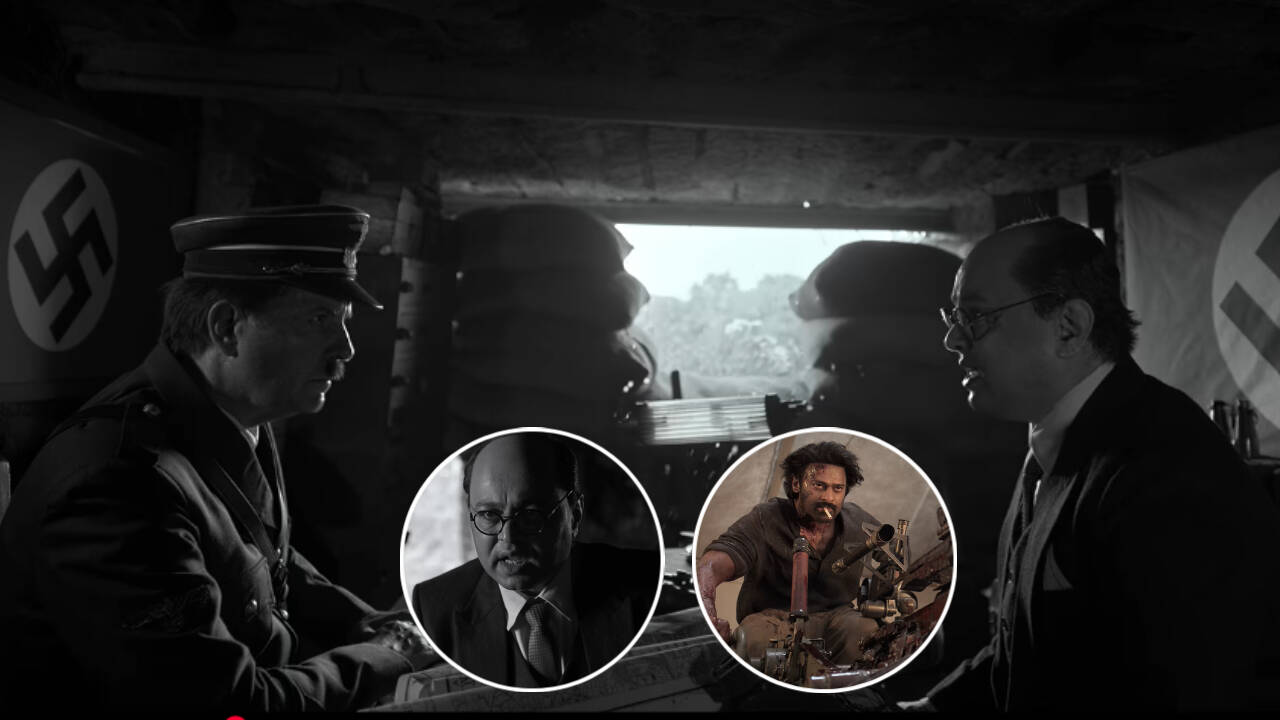
As the digital condemnation scaled exponentially within forty-eight hours of the teaser’s drop, digital rights advocates, historians, and descendants of freedom fighters voiced profound outrage, characterizing the juxtaposition as an egregious distortion of historical truth. Public intellectuals and political commentators have taken to social media channels under trending hashtags demanding an immediate retraction of the controversial frames, a public apology from the production house, and strict oversight from censorship boards. The visceral nature of the public reaction underscores the deeply revered status Netaji commands in the collective Indian psyche, where his Azad Hind Fauj (Indian National Army) remains a sacred symbol of anti-colonial resistance.
Industry insiders note that the studio, Mythri Movie Makers, and director Hanu Raghavapudi are currently facing an unprecedented crisis management situation as trade analysts evaluate the potential box office fallout. While the production team initially championed the project as an ambitious fictional narrative set against the turbulent backdrop of World War II, the current socio-political climate has rendered such creative liberties explosive. This developing controversy highlights the delicate tightrope major film studios must walk when fictionalizing complex historical epochs, particularly involving figures whose legacies are deeply intertwined with national identity and pride.
📌 Essential Story Takeaways
- The teaser for Prabhas' upcoming film 'Fauzi' has sparked national outrage over its simultaneous portrayal of Netaji Subhas Chandra Bose and Adolf Hitler.
- Cultural historians and political groups are demanding an immediate apology and the removal of the controversial scenes before the film's March 19, 2027 release.
- The production house and director Hanu Raghavapudi face significant reputational risks and potential challenges with the Central Board of Film Certification (CBFC).
- While critics view the depiction as a historical insult, a faction of fans defends it as cinematic fiction within a wartime geopolitical context.
Historical Background & Contextual Precedents
In recent years, Indian cinema has witnessed a surge in big-budget historical epics aiming for global audiences, often employing high-concept visual storytelling and dramatic licensing to maximize box office appeal. However, the proliferation of digital platforms has democratized media critique, ensuring that promotional assets are scrutinized by hyper-vigilant audiences capable of mobilizing rapid, coordinated opposition. The ‘Fauzi’ controversy is part of a broader, recurring pattern where contemporary filmmakers clash with public sensibilities over the interpretation of national icons. Past cinematic ventures dealing with sensitive historical figures have similarly faced legal challenges, political protests, and demands for pre-release screenings by socio-cultural organizations, establishing a precedent that heavily influences the trajectory of high-stakes productions today.
Deep-Dive Investigation & Sectoral Impact
Industry analysts point to a systemic pressure within modern Indian commercial cinema: the necessity to command immediate attention in an overcrowded digital ecosystem dominated by algorithmic feeds. In striving for ‘disruption,’ marketing teams increasingly deploy provocative imagery that tests the boundaries of public tolerance. Yet, our investigation into production circles indicates a growing internal friction between creative directors striving for narrative edge and corporate producers acutely aware of financial exposure. With ‘Fauzi’ representing a massive capital investment involving pan-Indian star Prabhas, the miscalculation in the teaser’s framing exposes the vulnerabilities of relying on shock value rather than contextual sensitivity in historical storytelling.
Stakeholder Perspectives & Official Statements
Conversely, supporters of the creative team argue that the film is explicitly a work of fiction, using historical backdrops as a canvas rather than a documentary textbook. Industry trade analysts suggest that fan communities have rallied around Prabhas, urging audiences to reserve judgment until the full narrative context is revealed on screen. Meanwhile, political organizations across the spectrum have begun weighing in, with regional factions threatening legislative complaints and protests if the contentious frames are not excised. Legal experts indicate that while filmmakers possess creative freedoms under constitutional provisions, the Central Board of Film Certification (CBFC) may intervene under guidelines prohibiting content that incites public discord or disrespects national heroes.
Strategic Implications & Future Roadmap
❓ Key Questions Answered (FAQ)
The primary trigger is a sequence in the newly released teaser for the film 'Fauzi' that visually juxtaposes Indian independence leader Subhas Chandra Bose with Adolf Hitler, sparking accusations of historical distortion and disrespect.
The production house Mythri Movie Makers, director Hanu Raghavapudi, and lead actor Prabhas are directly affected, facing fierce online backlash, calls for public apologies, and potential scrutiny from the Central Board of Film Certification (CBFC).
Key milestones include potential official revisions to the promotional teaser, upcoming statements from the production studio, CBFC review committees, and the film's scheduled global theatrical release on March 19, 2027.